Are you thinking about what it actually takes to make your home work for you as you get older? Are you already noticing small things around the house that didn’t used to be a problem? If so, you’re not alone. Fortunately for homeowners considering aging in place, there is no shortage of big and small home renovations that can make your home more comfortable.
Below are some of NeighborBuild‘s favourite senior-friendly home renovations in Ottawa for homeowners looking to age in place. Read on to learn more.
1. Add Grab Bars and Handrails
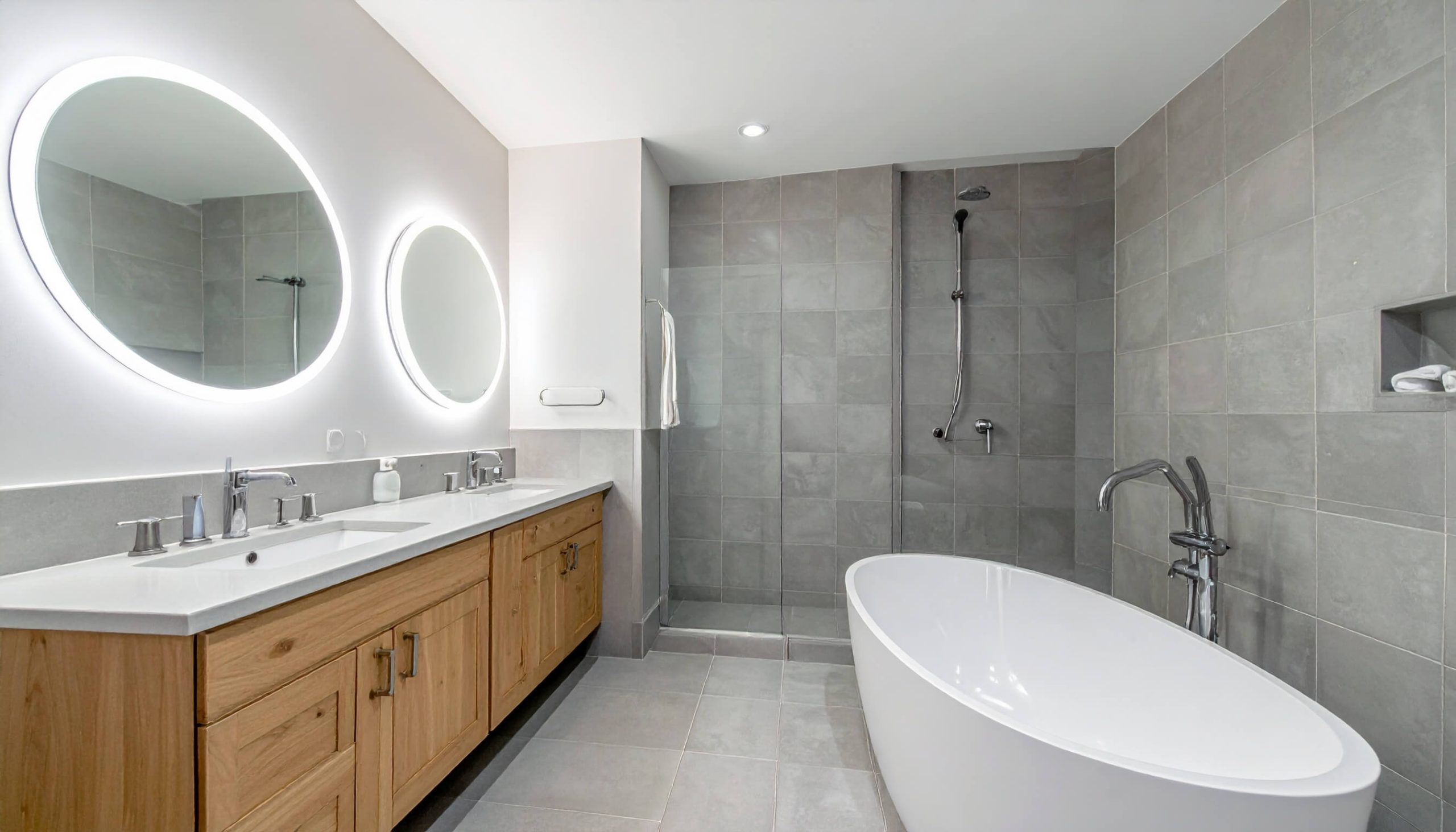
Not all hazards are immediately obvious. Many homeowners overlook the importance of an accessible bathroom, even though it’s one of the highest-risk rooms in the home for falls. Wet surfaces, awkward positioning around the toilet, and slippery shower floors all play a role.
That’s why installing grab bars near the toilet, inside the shower, and along the tub wall is a practical upgrade, as it provides a solid surface to hold onto. High-quality handrails and grab bars are among the most impactful bathroom renovation upgrades for aging in place. Modern options come in finishes that blend seamlessly into your existing bathroom.
2. Switch to a Walk-In or Curbless Shower
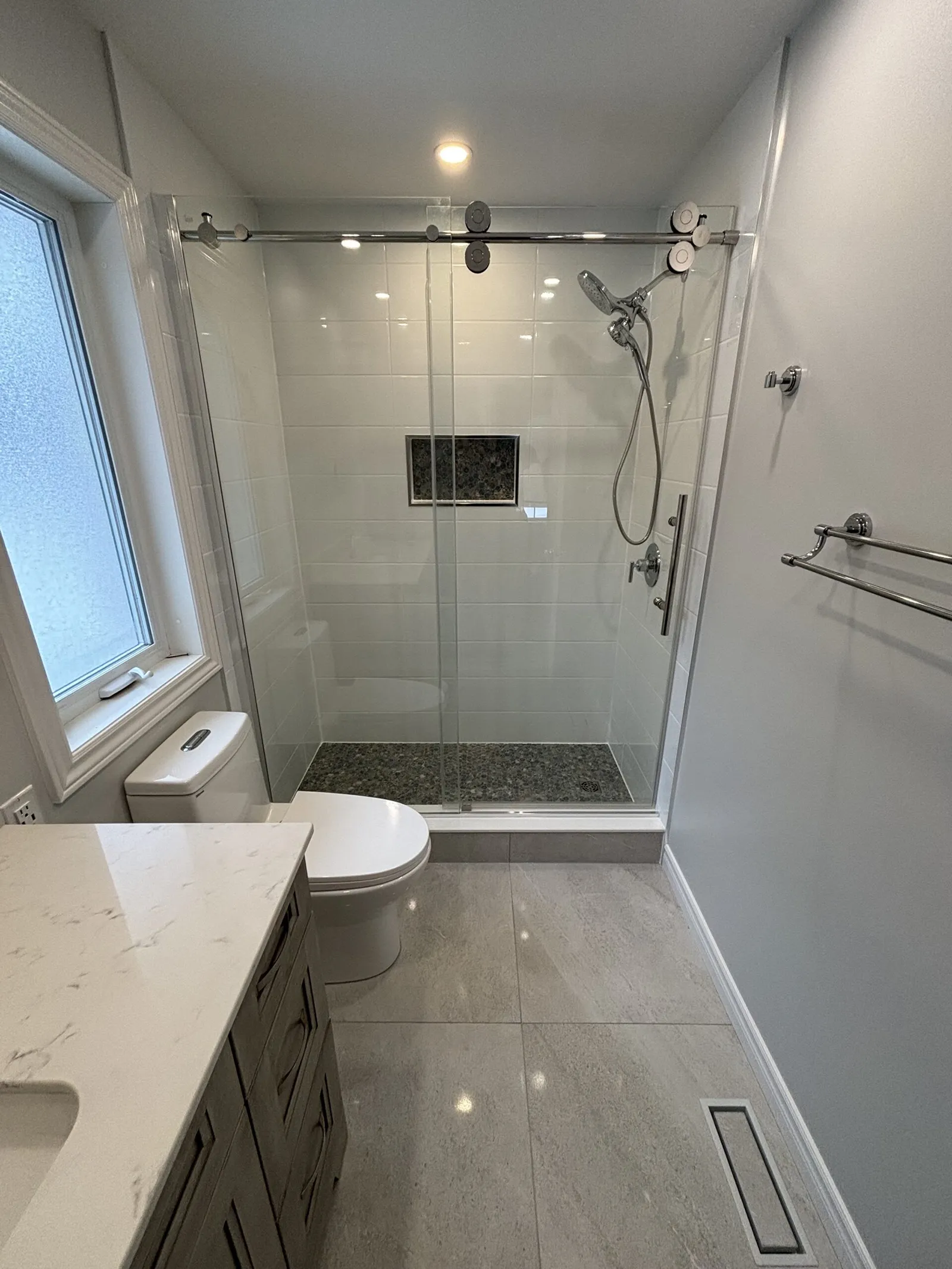
If you notice stepping over your bathtub ledge becoming more difficult, it may be time to rethink your bathroom setup. Renovating your traditional step-in shower to a curbless design removes that barrier, as there is no lip or edge to navigate around. Many homeowners choose to pair this with a built-in bench for further comfort.
3. Move Your Bedroom to the Main Floor
If you’re starting to feel uneasy going up and down stairs, a more accessible layout can make life easier. Stairs are often the first challenge that catches homeowners off guard as mobility changes. Fortunately, one of the most effective ways to enjoy your home without sacrificing comfort is to move your bedroom to the main floor. Whether it’s dividing a larger room, converting an existing space, or building an addition, you can create a comfortable bedroom without gutting your main floor.
4. Widen Interior Doorways
Even the smallest changes can make a big impact, such as swapping out smaller doors for larger ones. Standard interior doors are 28 to 32 inches wide, which works for most people. But when a walker or wheelchair comes into play, that width can feel restrictive.
Widening doorways to at least 36 inches is a common accessibility modification, and in most cases, does not require major structural changes.
5. Upgrade to Non-Slip Flooring
Floors don’t need to be damaged to be unsafe. Some flooring types, such as glossy laminate or polished tile, can still be slippery underfoot. These surfaces can pose safety risks, especially in high-traffic areas like bathrooms, kitchens, entryways, and hallways. That said, visible wear still matters. Cracked tiles, worn hardwood, or loose area rugs throughout the home can all increase fall risk. As flooring wears down, it often becomes much less reliable.
Replacing high-traffic areas with textured tile, slip-resistant vinyl, or low-pile carpet is often a practical and straightforward fix.
6. Improve Lighting Throughout the Home
If your home is starting to feel dimmer than usual, it may be time to look into lighting upgrades. Dimly lit hallways, dark staircases, and poorly lit bathrooms can make navigating uncomfortable, raise safety concerns, and make everyday tasks more difficult.
Adding brighter overhead fixtures, under-cabinet lights, and motion-sensor lighting in key areas can help eliminate those danger zones. Though a relatively simple change, upgrading lighting offers an immediately noticeable benefit that significantly improves daily comfort.
Plan Ahead with NeighborBuild
If you’re considering senior-friendly home renovations in Ottawa, NeighborBuild is here to help you plan, design, and build with the future in mind. We’re Ottawa’s trusted team for home renovations, remodels, and accessibility upgrades.
Get in touch with our team today for a free consultation and take the next step toward a home that works for you long-term.